



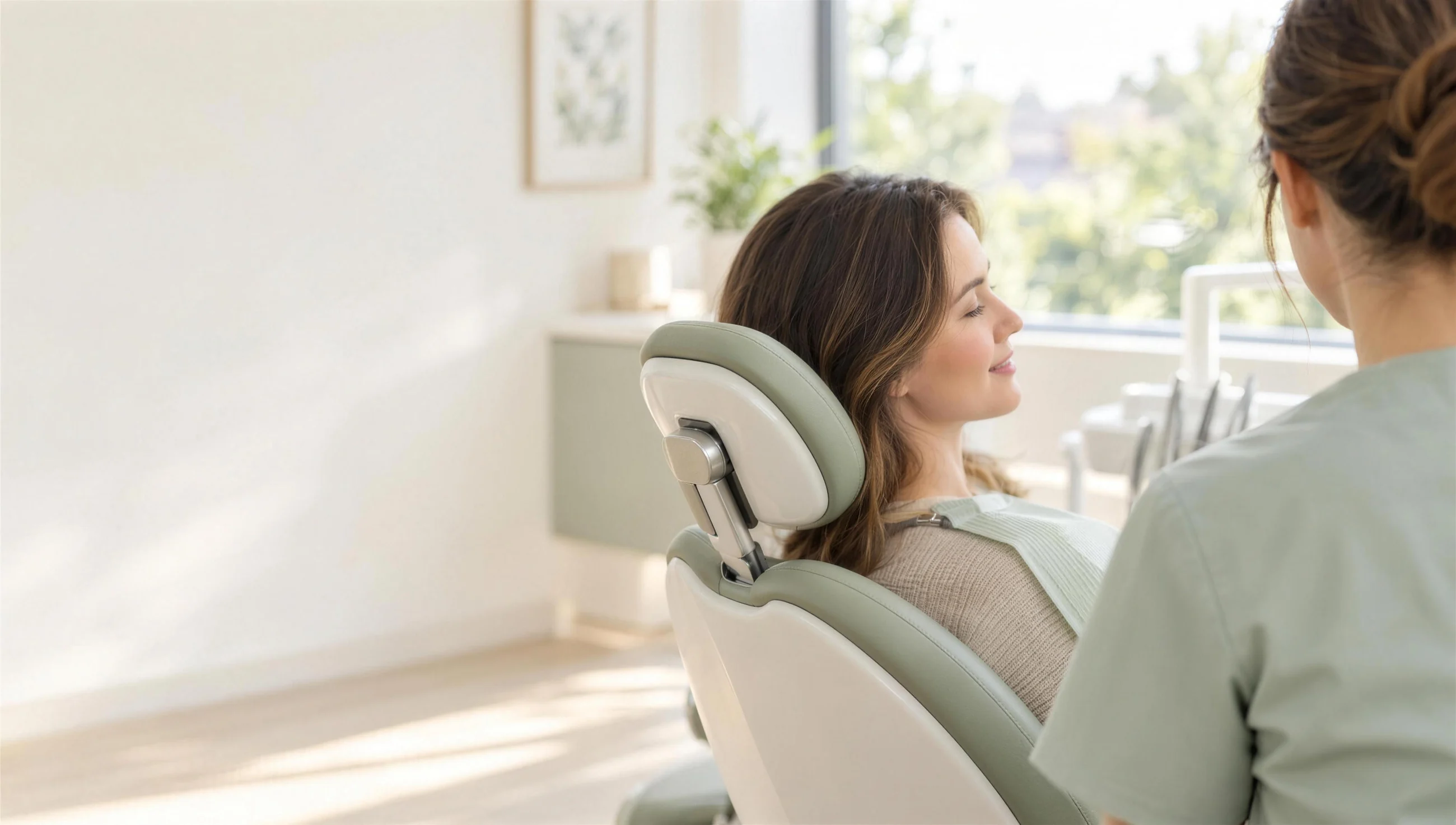
Veneers in DarmstadtThin shells. Your smile.
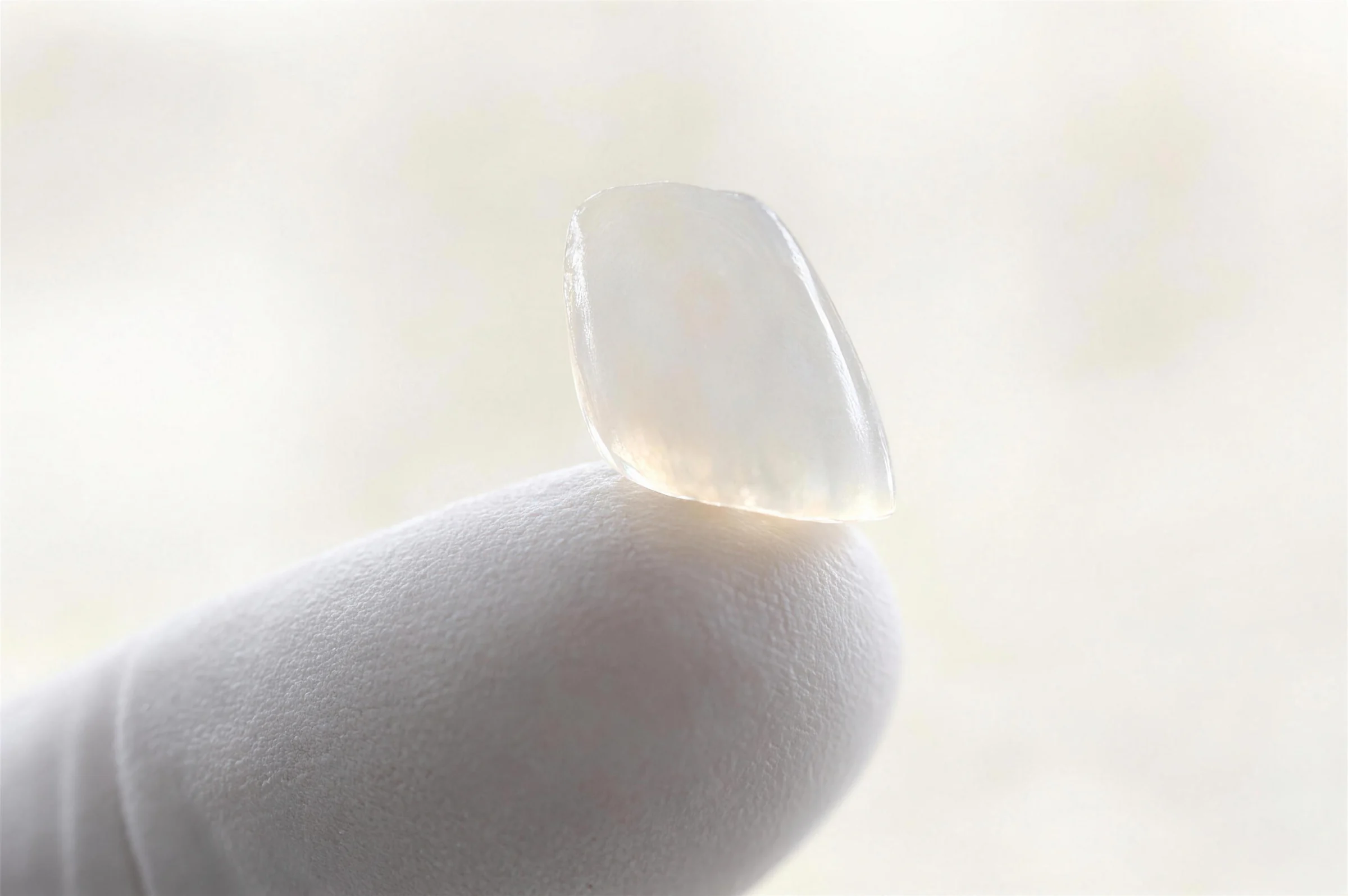
Veneers are wafer-thin shells of glass ceramic bonded to the front surface of the anterior teeth. They can even out discolouration, small gaps, chipped edges and uneven shapes – planned digitally, made in our own in-house dental lab and so natural that the treatment is not meant to be noticed.
Mon–Thu 8 am–6 pm · Fri 8 am–5 pm · Dieburger Straße 10, Darmstadt
Veneers are a good fit when …
Four situations in which a thin ceramic shell is often the most tooth-friendly answer.
- individual front teeth are discoloured in a way whitening cannot even out
- an edge has chipped or a tooth has become shorter through wear
- small gaps between the front teeth or unevenly shaped teeth bother you when you smile
- you want a solution that costs as little healthy tooth structure as possible and looks like your own tooth
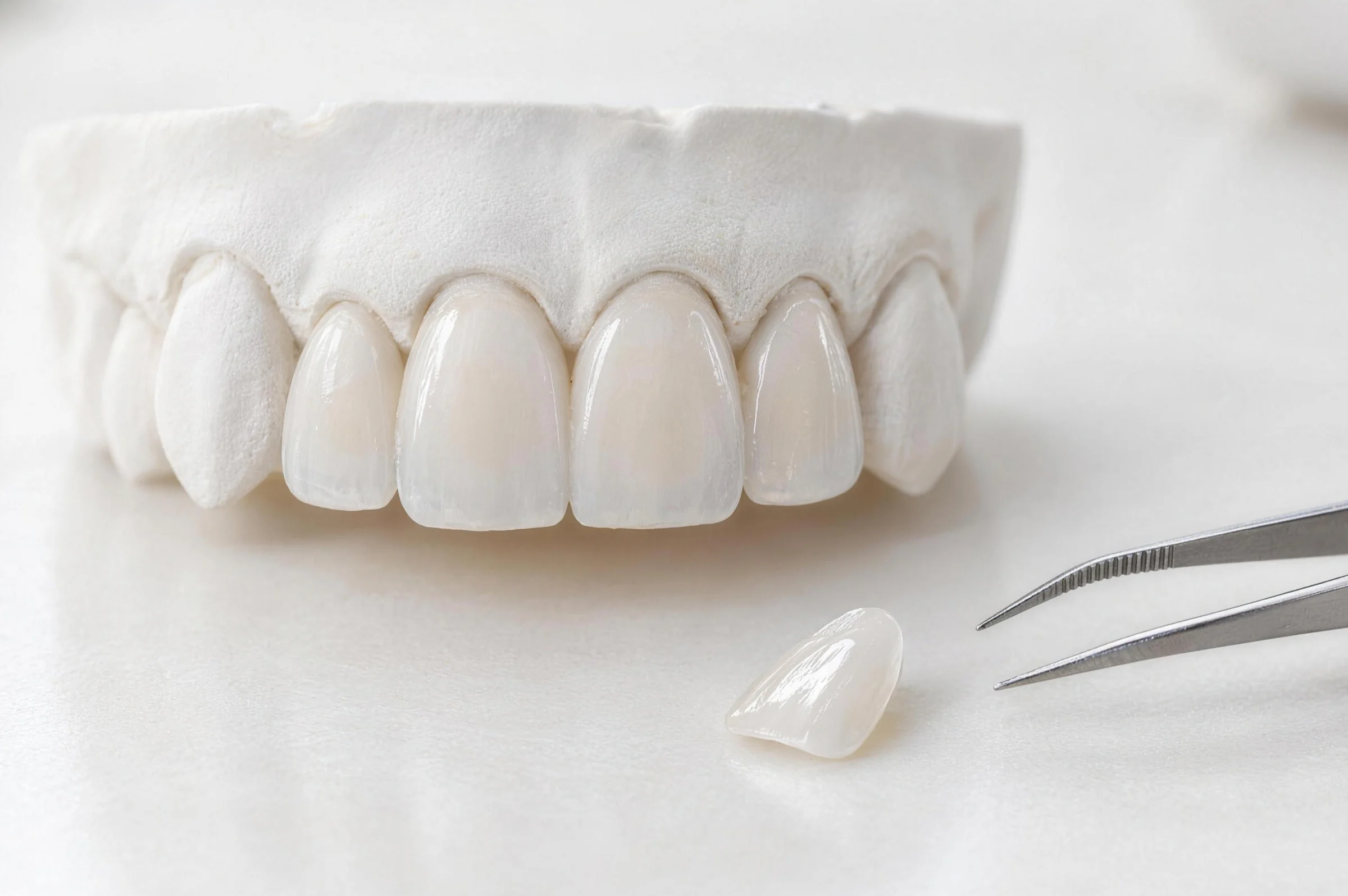
A thin shell that completes the tooth rather than replacing it.
A veneer is a wafer-thin ceramic facing bonded permanently to the visible front of a tooth. The tooth underneath stays largely intact – unlike a crown, which covers it all round. Four things that set veneers apart.
Little tooth structure
For a classic ceramic veneer, the front of the tooth is reduced by only a few tenths of a millimetre, usually within the enamel. In suitable cases no grinding is needed at all. A crown needs considerably more space all round.
Natural play of light
Glass ceramic lets light through in much the same way as natural enamel. That is why a well-made veneer does not look like a surface stuck on, but like your own tooth – with fine shade gradients and a little translucency at the edge.
Colour-stable
Ceramic hardly absorbs pigments from coffee, tea or red wine and keeps its gloss for years. Composite fillings on front teeth discolour over time and need polishing or replacing more often.
Planned, not guessed
Shape, length and shade are designed on a 3D model of your teeth and can be shown as a preview in your mouth before treatment. The shells are made in our in-house dental lab – so adjustments are a short walk away.
Glass ceramic, wafer-thin.
Our veneers are made of glass ceramic, usually lithium disilicate. It is about 0.3 to 0.7 millimetres thick, is bonded to the tooth and only then gains its full strength – much like a thin pane of glass glued to a solid base.
We choose the shade in daylight on your own teeth, not from a distance. Because the shells are made in-house, shape and shade can be checked and adjusted on the tooth before they are bonded for good.
Honest planning: when yes, when something else is better.
Veneers are not a cure-all. We first check whether a simpler route gets you there – whitening, a small composite correction or tooth movement with aligners. Only when veneers really are the right answer do we plan them.
What we use veneers for
- Discoloured individual teethFor example after root canal treatment, with enamel spots, or when whitening is not enough.
- Chipped or worn edgesWhen a front tooth has become shorter or uneven.
- Small gaps and uneven shapesNarrow gaps, peg-shaped teeth or teeth that stand out of line.
- Irregular surfacesGrooves, enamel defects or old, discoloured fillings on the front of the tooth.
What we plan differently
- Heavy grinding or clenchingThe thin shells could fracture. We address the cause first, often with a night guard; veneers only with a protective splint, or not at all.
- Large fillings or little remaining toothIf much tooth structure is missing, a veneer has no secure base. A partial crown or crown is the better option. More about crowns
- Pronounced misalignmentCrooked or rotated teeth can only be straightened by veneers in appearance – often at the expense of healthy structure. Better to start with invisible aligners.
- Gum inflammation or decayThe tooth must be healthy first. After periodontal treatment or a filling we wait until everything has settled.
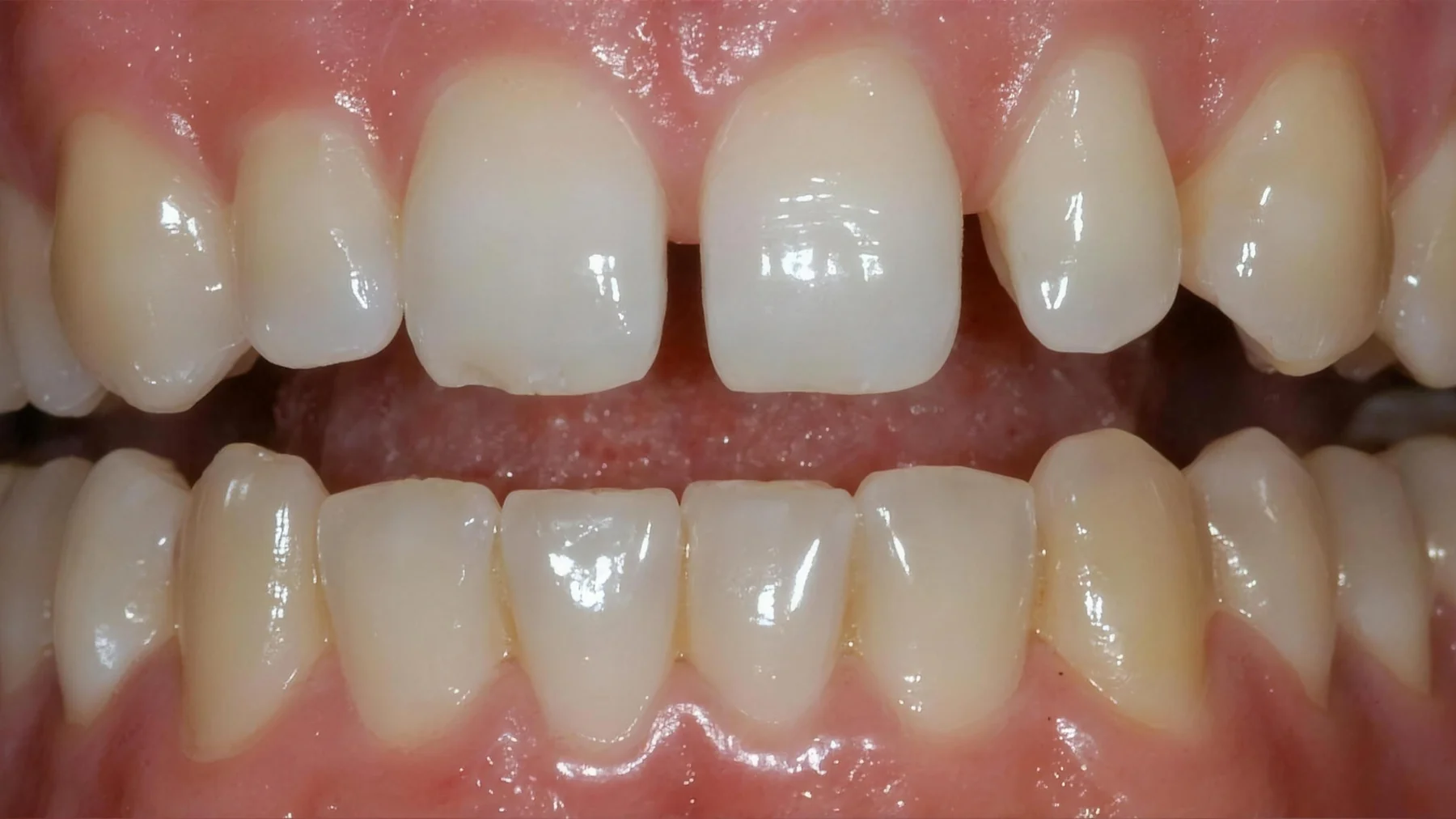
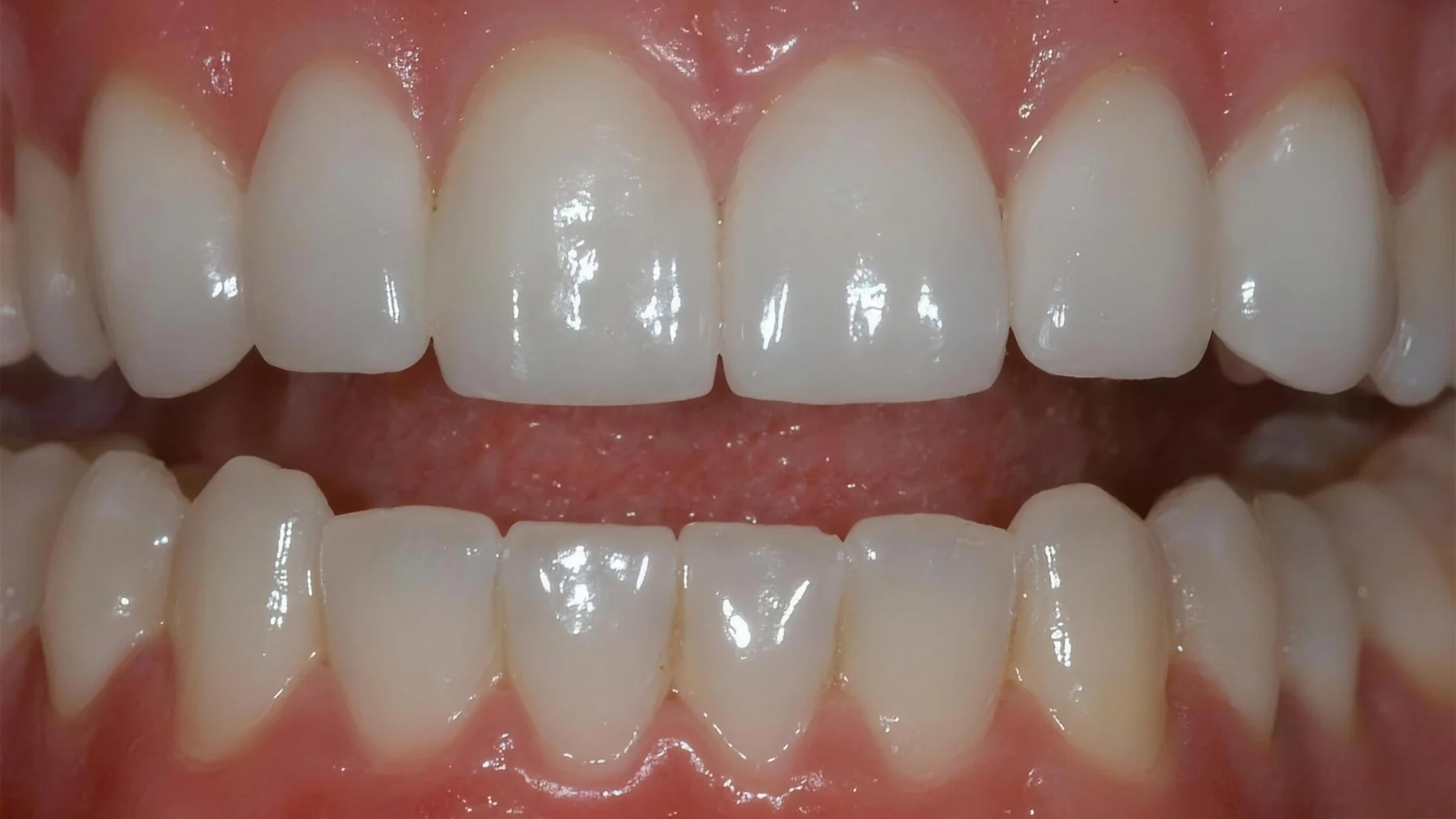
Results are individual and depend on the starting situation.
Five steps – and you see the result beforehand.
This is how veneers are made with us. Usually it takes two to three appointments; the times given are typical values and depend on the number of teeth.
Consultation and examination
What bothers you, what do you wish for? We look at teeth, gums, bite and lip line, clarify whether veneers are the right solution at all, and discuss alternatives openly.
Digital planning
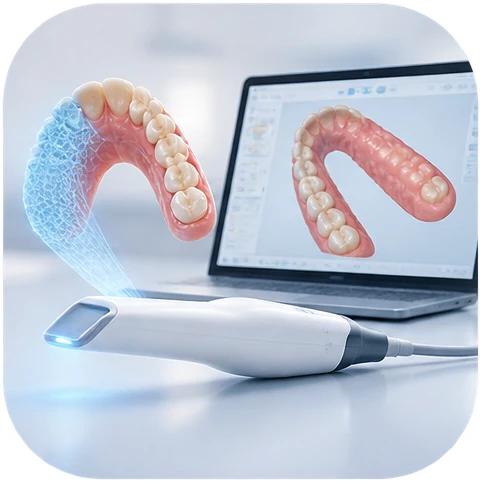
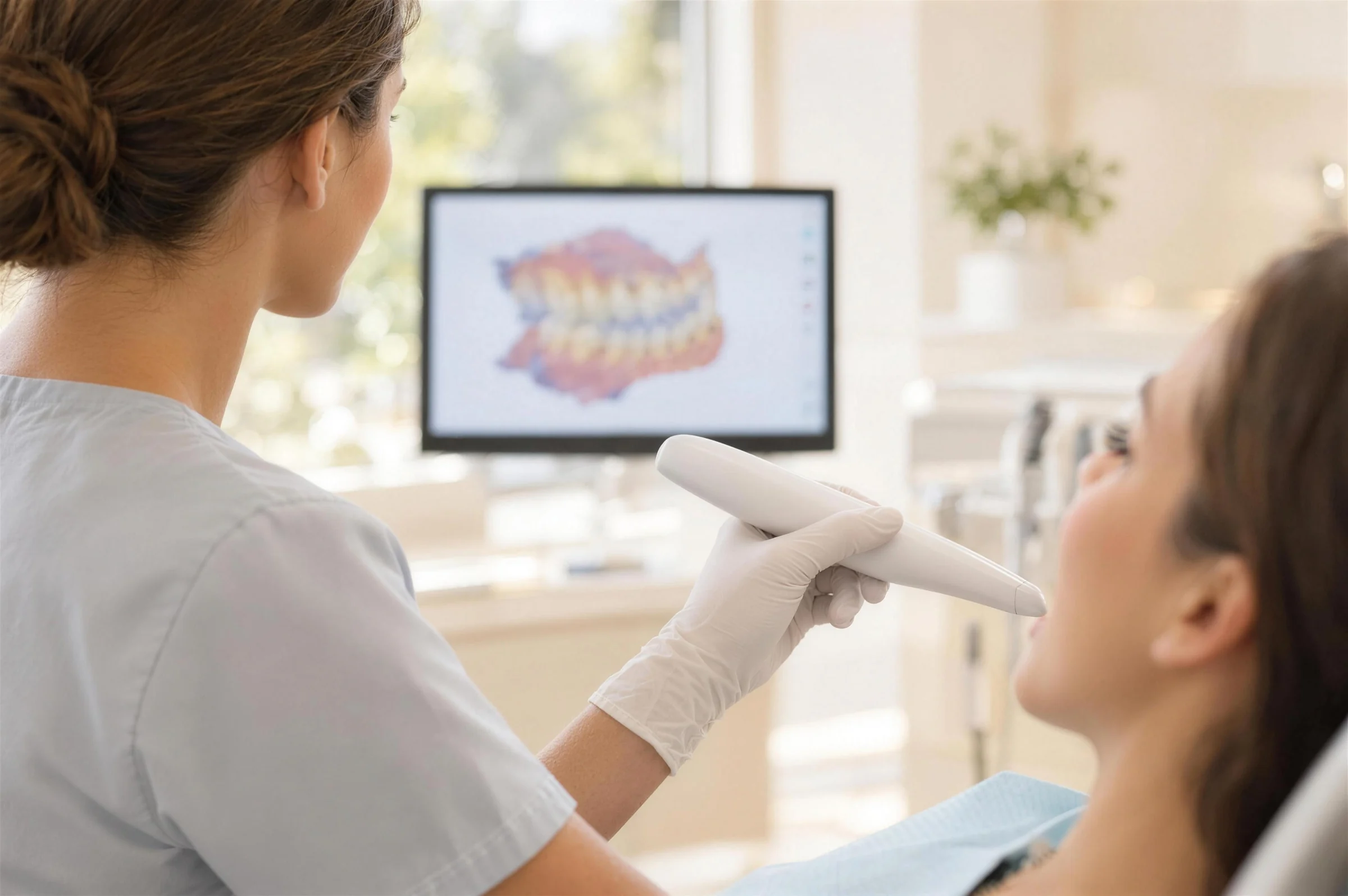
Instead of impression putty we scan your teeth with the cordless Primescan 2. On the 3D model we design the shape, length and proportions of the new tooth surfaces – to suit your face and lips, not a template.
Mock-up in your mouth
On request we transfer the design to your teeth as a trial build-up in resin – without any grinding. You see in the mirror how the result could look, and we adjust until it is right.
Gentle preparation
The front of the tooth is reduced only as far as the shell needs – under local anaesthetic, usually within the enamel. Then another scan. The veneers are made in our in-house lab; until then a temporary protects the tooth.
Try-in and bonding
We place the shells on trial, check shade, shape and bite together with you and then bond them permanently to the tooth. After polishing you can eat as usual.
Ceramic, no-prep or composite – honestly compared.
Not every veneer is the same. Which option fits depends on your starting point, your wishes and your budget. We explain the differences before you decide.
Ceramic veneers
The classic option: glass ceramic, 0.3 to 0.7 mm, made in the in-house lab after minimal preparation. Very natural play of light, colour-stable, usually lasts many years with good care. For you: the longest-lasting solution when shape or shade should change noticeably.
No-prep veneers
Even thinner ceramic shells bonded without any grinding. Sounds ideal, but only works when the teeth are rather small, set back or worn – otherwise they look bulky. For you: maximum tooth preservation if your starting point allows it. We assess that honestly.
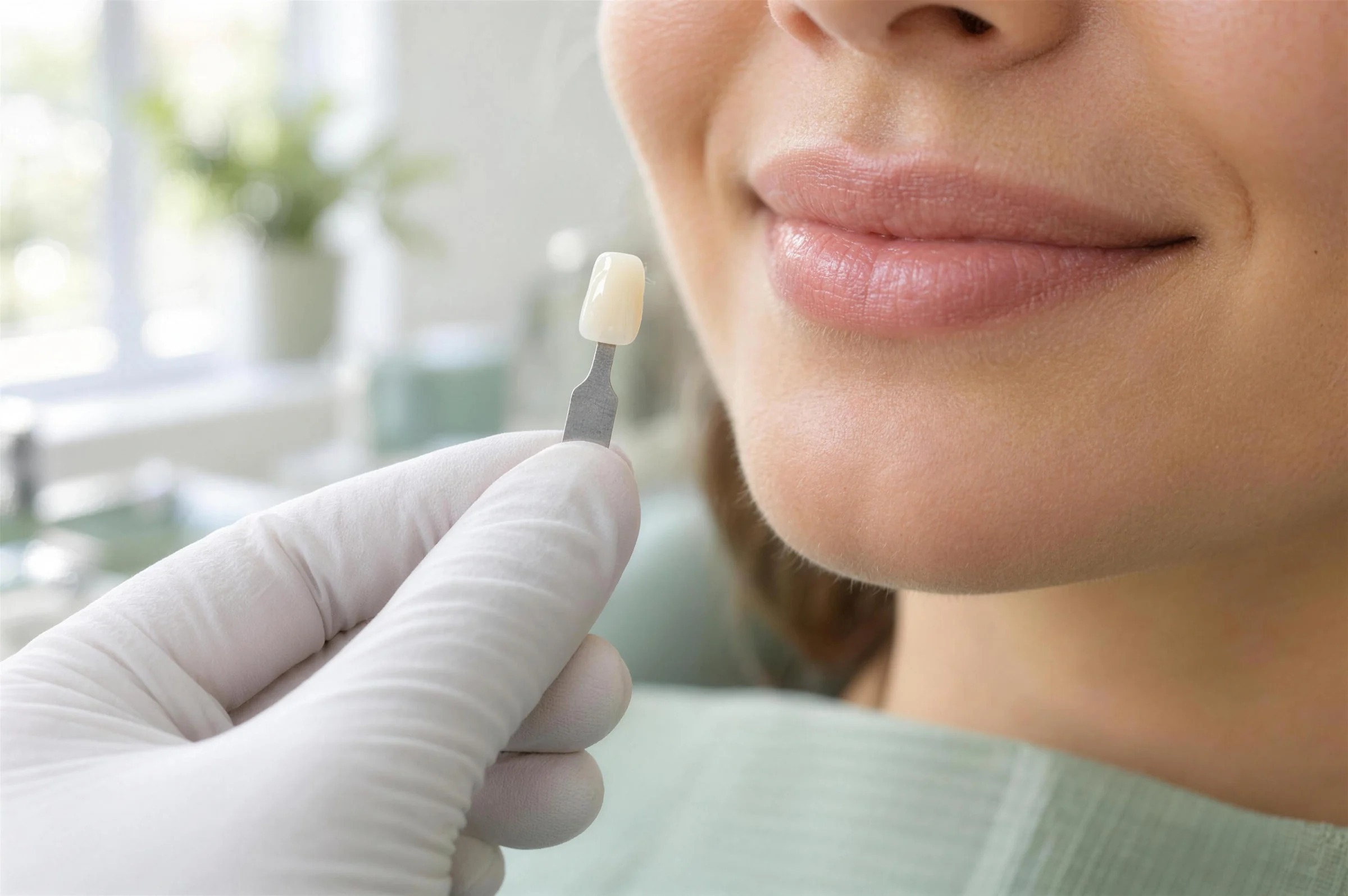
Composite veneers and care
Tooth-coloured resin sculpted directly in the mouth, finished in one visit and less expensive. Less light-fast, discolours over time and usually lasts less long – sensible for small corrections or as an interim solution. Care for all options: normal brushing, floss, regular professional cleaning and, if you grind at night, a protective splint. Don't bite nails or open packaging with your teeth.
What veneers cost – and why we don't quote a flat rate.
Veneers are usually a private treatment: German statutory health insurance does not cover purely cosmetic procedures. The cost depends on the number of teeth, the option (ceramic, no-prep, composite) and the planning involved. Instead of a flat rate you receive a written treatment and cost plan after the examination, listing every item – before anything happens.
- 1Consultation and examinationWe clarify whether veneers fit or a simpler route is enough.
- 2Written cost planItemised per tooth and option; you decide at your leisure.
- 3Supplementary dental insuranceSome plans contribute to veneers; the cost plan is what you submit.
- 4Privately insuredReimbursement depends on your plan; the cost plan is for your insurer.
Frequently asked questions about veneers.
What do veneers cost in Darmstadt?
Veneers are a private treatment; statutory insurance does not pay for purely cosmetic procedures. The cost depends on the number of teeth, the option and the planning involved, which is why we do not quote a flat rate. After the examination you receive a written cost plan, which you can also use to enquire with a supplementary dental insurer.
How long do veneers last?
Ceramic veneers usually last many years with good care. What matters most is the bonding, oral hygiene and whether you grind your teeth. Composite veneers usually last less long. There can be no blanket guarantee; regular check-ups help veneers and teeth stay healthy for a long time.
Do the teeth have to be ground down?
With classic ceramic veneers the front is reduced by a few tenths of a millimetre, usually within the enamel. On suitable teeth, no-prep veneers are possible without any grinding. We see what makes sense for you on the 3D model and discuss it before treatment.
Does the treatment hurt?
Preparation is done under local anaesthetic and is usually much smaller than for a filling. The digital scan is low-contact and replaces the impression tray. In the first days after bonding the teeth may be a little sensitive to cold; that usually settles.
Can you tell they are veneers?
That is exactly the goal: no. Glass ceramic lets light through like natural enamel, and shape and shade are matched to your other teeth and your face. We do not plan teeth that are too white or too uniform, but a smile that suits you. With the mock-up you see this in advance.
Veneers or whitening – which makes more sense?
If it is only about shade and the teeth are healthy and evenly shaped, whitening is the simpler solution. Veneers make sense when shape, length or gaps should change as well, or when individual teeth cannot be lightened. We often combine the two: whitening first, then veneers in the new shade.
Can I have veneers if I grind at night?
Grinding puts heavy strain on the thin shells. We first clarify the cause and usually provide a night guard. In many cases veneers are then possible with a splint; with very heavy grinding we honestly advise against them or recommend a sturdier restoration.
Where are the veneers made?
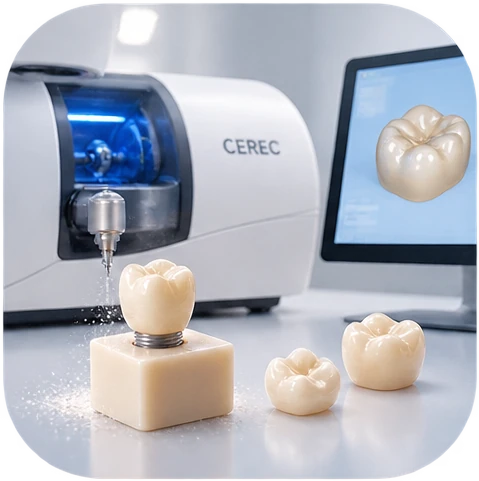
In our own digital in-house dental lab in Dieburger Straße. That way shape and shade can be matched directly on the tooth and adjusted at short notice if needed. For single veneers, CEREC milling from a ceramic block is also possible on request.
Teeth whitening
If only the shade bothers you: gentle whitening in the practice or at home.
Learn more: whitening When more is missingAll-ceramic restorations
Crowns, partial crowns and bridges in ceramic when a veneer is not enough.
Learn more: restorations Digitally madeCrowns with CEREC
Ceramic from the block, in many cases in a single visit – also for single veneers.
Learn more: CEREC Behind the scenesOur in-house lab
Scanner, mill, furnace and 3D printer – this is where your veneers are made.
Learn more: dental labLook first, then decide.
Call us or book a consultation online. We look at your teeth, show you on the 3D model what is possible and tell you honestly whether veneers are the right solution. You receive the cost plan beforehand – with no obligation.
Opening hours & contact
Appointments by arrangement
Parking: REWE car park, Spilwesweg 1 – two minutes on foot.