




CEREC crowns in DarmstadtOne crown. One visit.
If you wish and if it suits your tooth: a scan instead of an impression, all-ceramic milled from a single block in our own in-house lab on Dieburger Straße. In many cases the crown is finished the same day – with no temporary and no second trip to see us.
Mon–Thu 8–18 · Fri 8–17 · Dieburger Straße 10, Darmstadt
CEREC is a particularly good fit when …
Four situations in which a crown made in our own practice makes the difference.
- you need a crown, partial crown, inlay or veneer and would like as few appointments as possible
- you found the impression with putty unpleasant or tend to gag
- you would like to avoid a temporary crown that can come loose or get in the way
- you value metal-free ceramic in your own tooth shade
Restorations made here with us – and what that means for you.
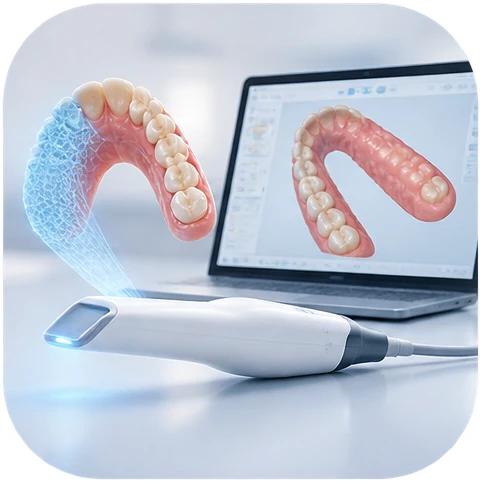
CEREC is a method in which a crown, inlay or veneer is planned entirely digitally and milled from ceramic right here in the practice. Your teeth are scanned with a small camera instead of being moulded with impression putty; the design is created on screen, and the restoration is made a few steps away in our in-house lab. Four things you will notice in everyday life.
One visit is possible
Scanning, milling and fitting can take place in a single morning when it suits your situation. For zirconia, several teeth or particular aesthetic wishes we deliberately plan a second visit. We discuss what makes sense beforehand.
No impression, no gagging
Instead of impression putty, the cordless scanner passes over your teeth with light. Nothing presses on your palate, and you can swallow or take a break at any time. The scan takes a few minutes, and you see the 3D model on screen straight away.
No temporary
If the crown is fitted the same day, the temporary crown is not needed – and neither are the weeks in which it could come loose, press or get in the way while eating. The prepared tooth is permanently restored at once.
All-ceramic in your tooth shade
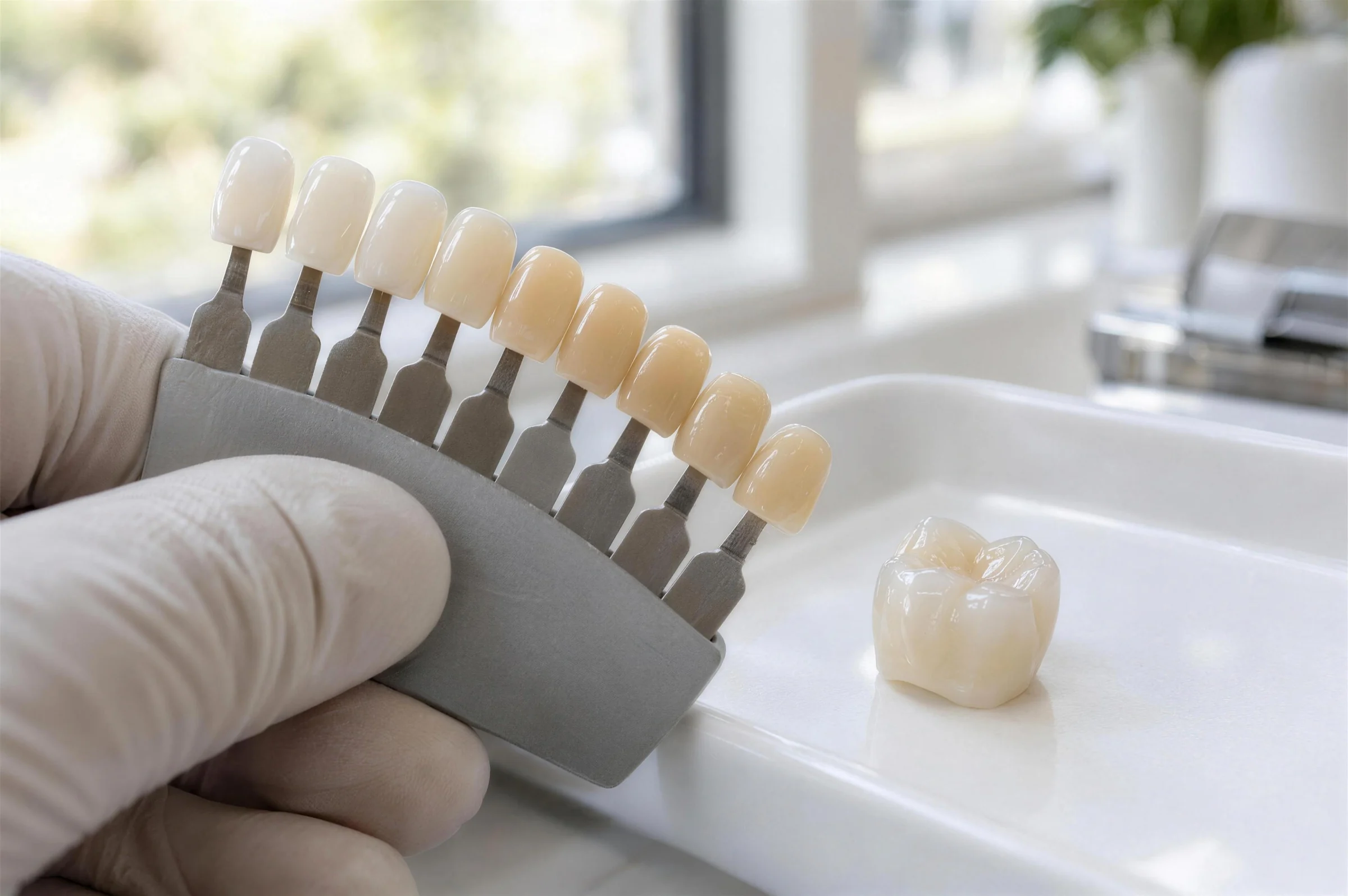
Glass ceramic or zirconia: strong, translucent like enamel, with no metal and no dark line at the gum. We choose the shade in daylight directly at your tooth and check the finished crown in your mouth. Read more: all-ceramic restorations
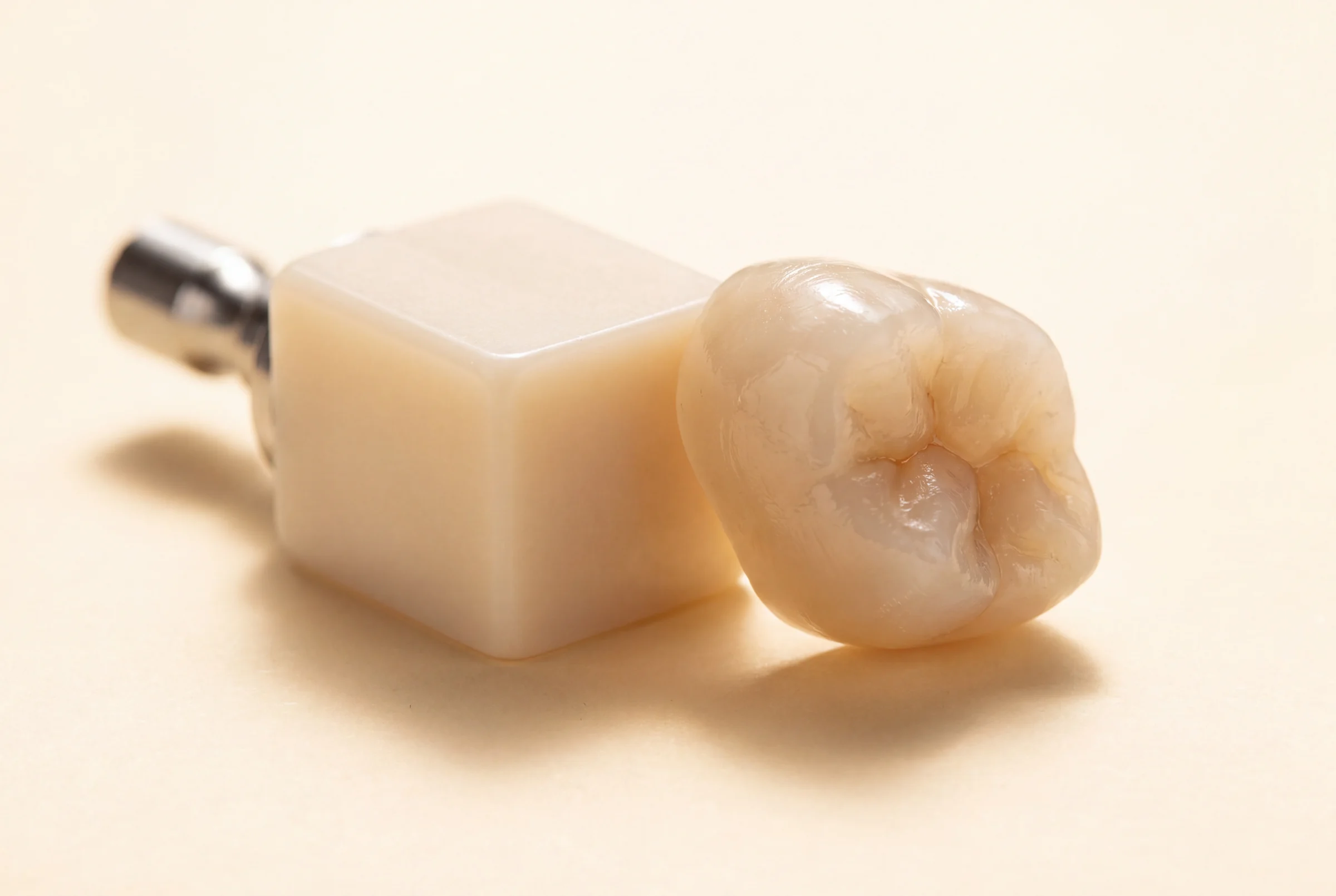
From the block to your crown.
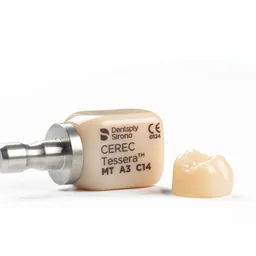
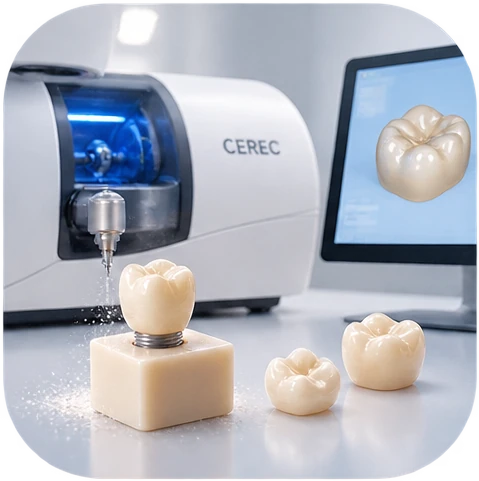
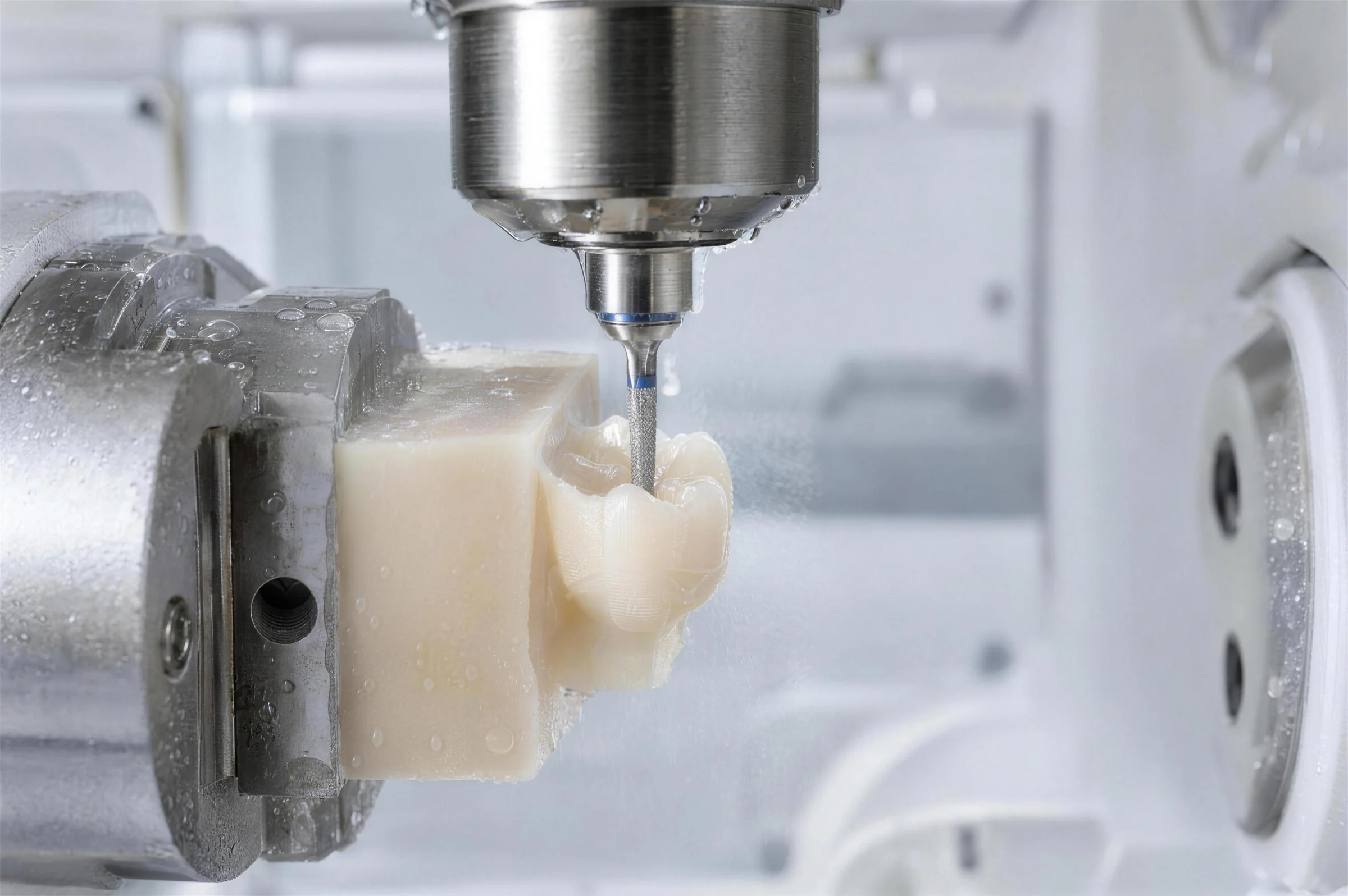
Every CEREC crown starts as a small, industrially made ceramic block: uniform, free of air bubbles, with no metal framework. The milling unit carves out the shape that was planned on screen for your tooth.
Glass ceramic lets light through much like natural enamel. We choose the shade in daylight directly at your tooth, not from a photo sent elsewhere – and check the finished crown in your mouth before it is bonded.
Four steps. One morning, if you wish.
This is how a CEREC crown is made with us. The times are typical values and depend on the tooth and the material.
Prepare and scan
The tooth is numbed locally and shaped so that the crown will have room later. Then the intraoral scanner passes over your teeth – in our practice the cordless Primescan 2, a small camera handpiece that builds a colour 3D model from thousands of single images. You watch the model appear on screen.
Design on screen
The crown is planned on the 3D model: shape, chewing surface, contacts with the neighbouring teeth, bite against the opposing jaw. The software proposes a shape, which we adapt to your teeth. You are welcome to watch.
Milled in the practice
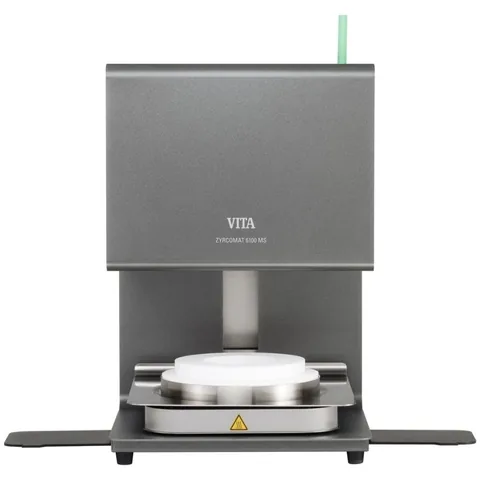
The data goes to the milling unit in our in-house lab. Fine diamond tools carve the crown out of a ceramic block in your tooth shade. Glass ceramic is then fired in the furnace so that it gains its final strength and gloss.
Check and fit
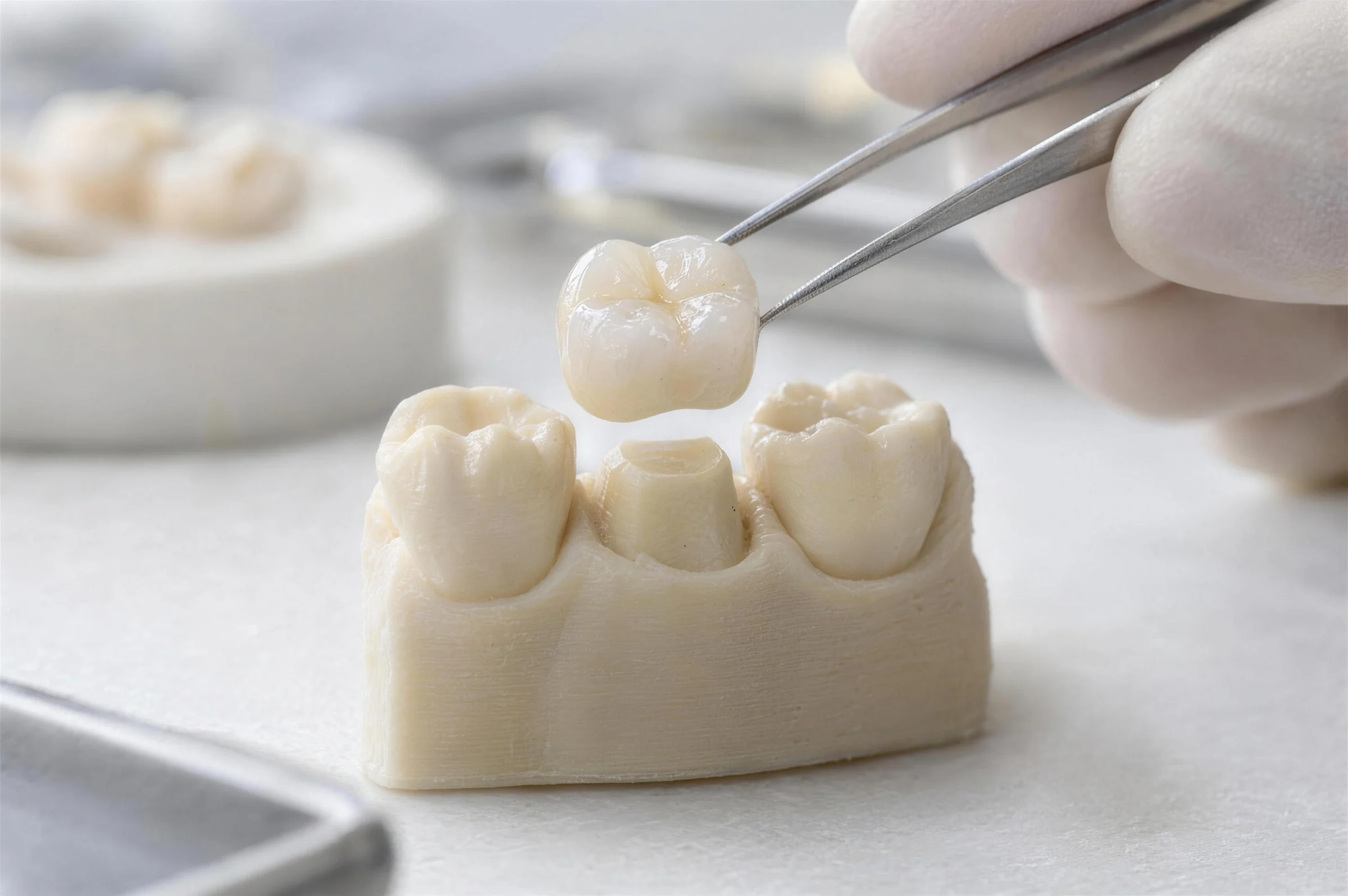
We try the crown in, check fit, bite and shade, and adjust where needed. Then it is permanently bonded to the tooth. Once the anaesthetic has worn off you can eat as usual.
Not every restoration has to be finished in a day.
For us, digital does not mean "faster at any price" but what suits the situation. What usually works, and what we plan differently.
This is what we use CEREC for
- Single crowns on back and front teethIn many cases in a single visit.
- Inlays and onlaysCeramic fillings for larger defects. More about fillings
- Partial crownsWhen part of the tooth can be preserved.
- VeneersWafer-thin ceramic shells for the front teeth. More about veneers
- Crowns on implantsAfter the healing phase, matched to the implant. More about single-tooth implants
This is what we plan differently
- Larger bridgesMulti-unit bridges are made in our in-house lab in several steps, usually from zirconia. More about restorations
- Demanding aesthetics in the frontWhen several front teeth have to match each other, a second visit with a try-in is often worthwhile.
- Removable denturesTelescopic and full dentures are made a different way. More about telescopic dentures
- When the tooth needs treatment firstAfter a root canal treatment or with inflamed gums we wait until the tooth has settled.
Ceramic that lasts for years – and what your insurer contributes.
With good care, all-ceramic crowns generally last many years. What matters is the material, the fit and your oral hygiene – not whether the crown was made in a day.
Glass ceramic (lithium disilicate)
Very natural in the way it handles light, which is why it is the first choice for visible areas, inlays, partial crowns and veneers. After milling it is fired in the furnace and bonded to the tooth. For you: a crown that looks like a tooth in the light – in many cases the same day.
Zirconia
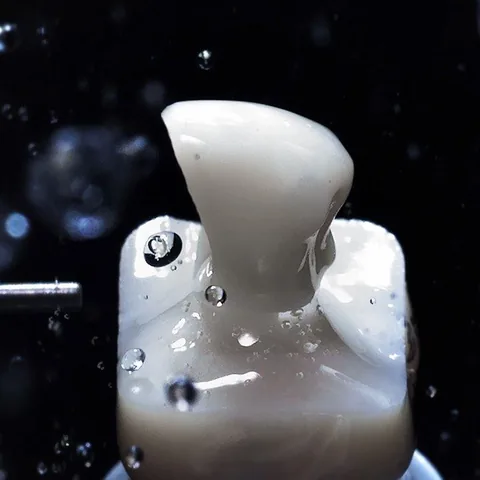
Very strong, and therefore the choice for heavily loaded back teeth and for bridges. After milling it is sintered at around 1500 °C, which is why a zirconia crown often takes until the next day. For you: metal-free stability where a lot of force is at work. Read more: all-ceramic
Shade, care and durability
The ceramic shade is determined in daylight at your tooth. To make the crown last: floss or interdental brushes at the crown margin, regular professional teeth cleaning and, if you grind at night, a night guard. If the crown presses or the bite is too high, we adjust it in-house, usually without a new appointment.
What the insurer pays – and what is settled in advance.
A crown counts as a dental prosthesis. German statutory health insurers contribute a fixed, diagnosis-based subsidy (Festzuschuss), regardless of which restoration you choose. Your own share depends on the diagnosis, the material and your bonus booklet. We give you concrete figures after the examination in the treatment and cost plan.
- 1Examination and diagnosisWe clarify whether a crown is needed and whether CEREC is suitable.
- 2Treatment and cost planGoes to your insurer before treatment; you see your share in advance.
- 3Bring your bonus bookletA complete bonus booklet increases the subsidy.
- 4Privately insuredReimbursement depends on your tariff; the cost plan is for submission to your insurer.
Frequently asked questions about CEREC.
Is the crown really finished in one day?
In many cases, yes: scanning, design, milling and fitting can all take place in one morning. Whether that suits your tooth is something we discuss beforehand. For zirconia, several teeth or particular aesthetic wishes we deliberately plan a second visit.
Does the scan hurt, and what about gagging?
The scanner only touches the teeth lightly and works with light. There is no impression putty that has to set in your mouth, so the usual trigger for gagging is gone. You can swallow or take a break at any time.
How long does a CEREC crown last?
With good care, all-ceramic crowns generally last many years. Durability depends above all on the fit, your oral hygiene and whether you grind your teeth. There can be no blanket guarantee; regular check-ups and professional cleaning help keep crown and tooth healthy for a long time.
Can you see the crown?
The ceramic is chosen in your tooth shade and is slightly translucent like natural enamel. There is no metal framework, so no dark line at the gum either. After fitting we check the shade in daylight together with you.
Does health insurance pay for CEREC crowns?
Statutory insurers pay a diagnosis-based fixed subsidy for dental prostheses, whether the crown is made digitally or in a conventional lab. You pay the extra cost for all-ceramic yourself; the amount depends on the diagnosis, the material and your bonus booklet and is stated in the treatment and cost plan you receive before treatment.
What if the crown breaks or presses later?
If the crown presses or the bite is too high, we grind and polish it in the practice, usually without a new appointment. Your scan is kept on file: if a crown breaks, a new one can be milled from the data without preparing the tooth again.
Is CEREC an option if I am afraid of the dentist?
Yes. Precisely because the impression and the temporary are not needed and fewer appointments are required, many anxious patients find the process reassuring. On request we treat under sedation. More for anxious patients
Where is the crown made?
In our own digital in-house lab on Dieburger Straße, a few steps from the treatment room. That is where the milling unit, the ceramic furnace and the 3D printer are. More about the in-house lab
Our in-house lab
Scanner, milling unit, furnace and 3D printer – what we have in the practice and what it does for you.
Read more: in-house lab MaterialAll-ceramic restorations
Crowns, bridges and telescopic work in ceramic: possibilities and limits.
Read more: restorations AestheticsVeneers
Wafer-thin ceramic shells for the shape and shade of the front teeth, digitally planned.
Read more: veneers Preserving teethFillings and inlays
When a filling is enough and when a ceramic inlay is the better solution.
Read more: fillingsOne scan, one practice, short distances.
Call us or book online. Tell us it is about a crown – then we plan the appointment so that, if you wish, the crown can be finished the same day. You receive the treatment and cost plan beforehand.
Opening hours & contact
Appointments by arrangement
Parking: REWE car park, Spilwesweg 1 – two minutes on foot.